2.3.1. CN5000 SuperNIC
The CN5000 Omni-Path SuperNIC is designed and optimized specifically to support OpenFabrics Alliance (OFA) software, delivering industry-leading performance at scale. The SuperNIC delivers up to 400 Gbps (4 x 100 Gbps) bandwidth in each direction, enabling very high message rates and low latency for greater application throughput.
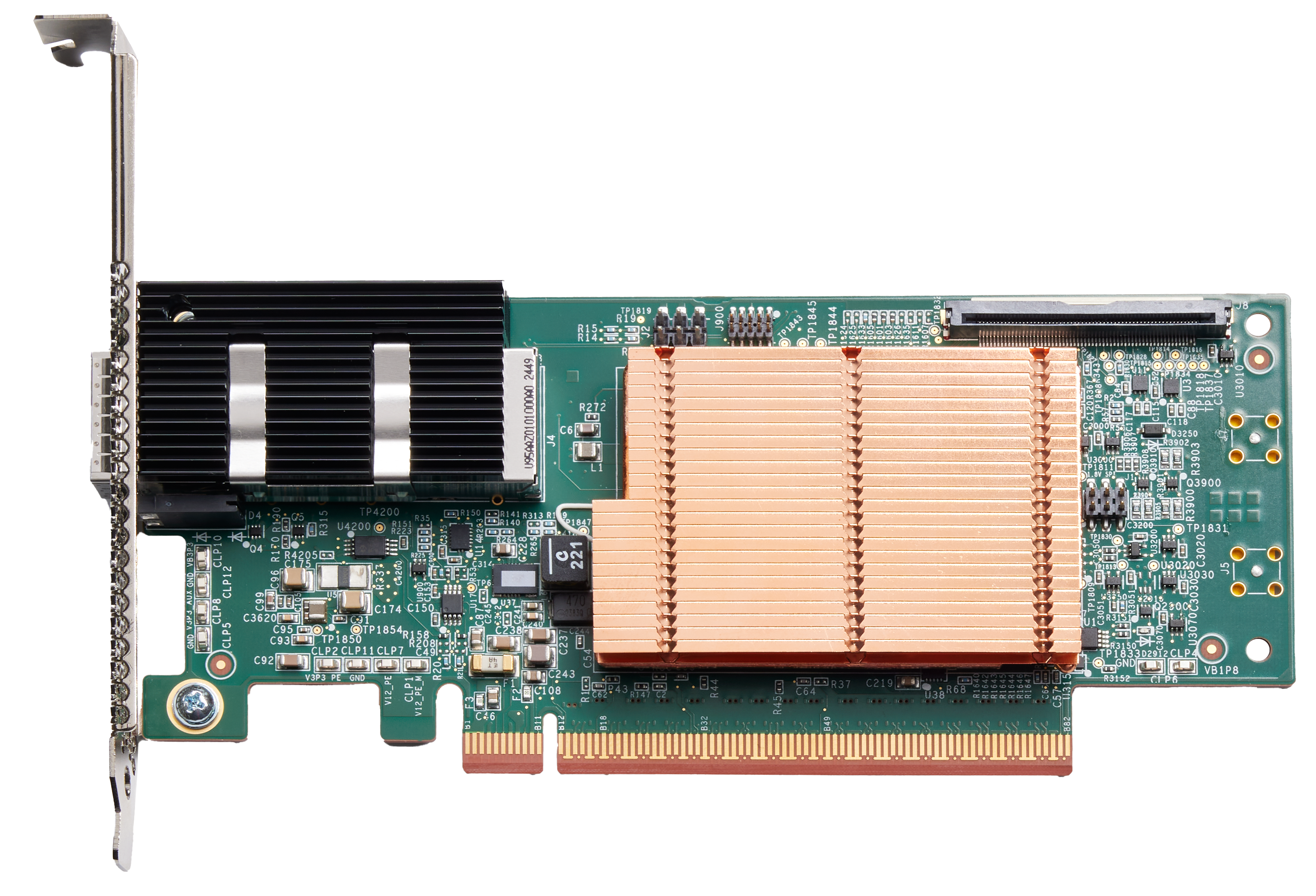
Single Port: Air-Cooled
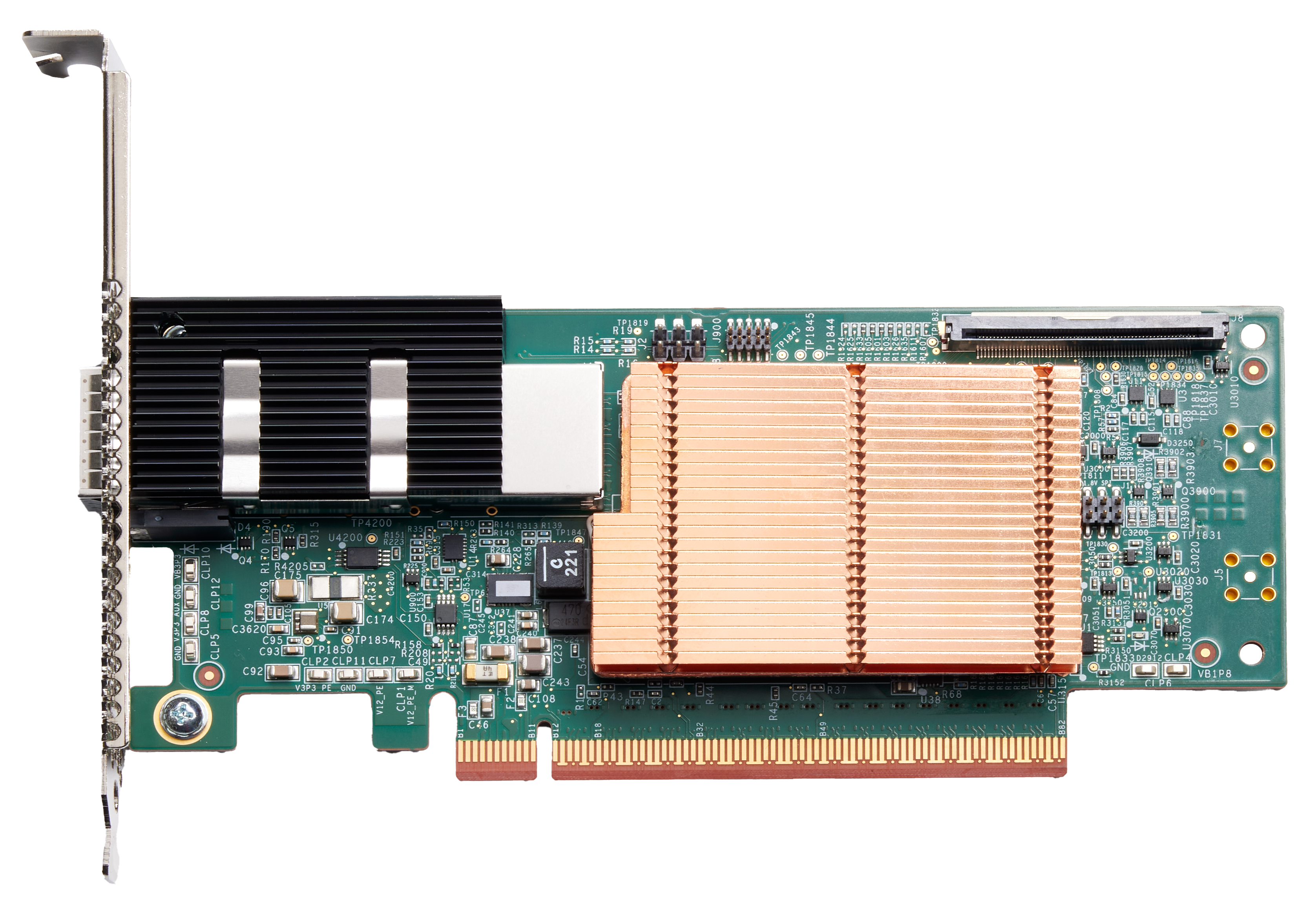
Dual Port: Air-Cooled
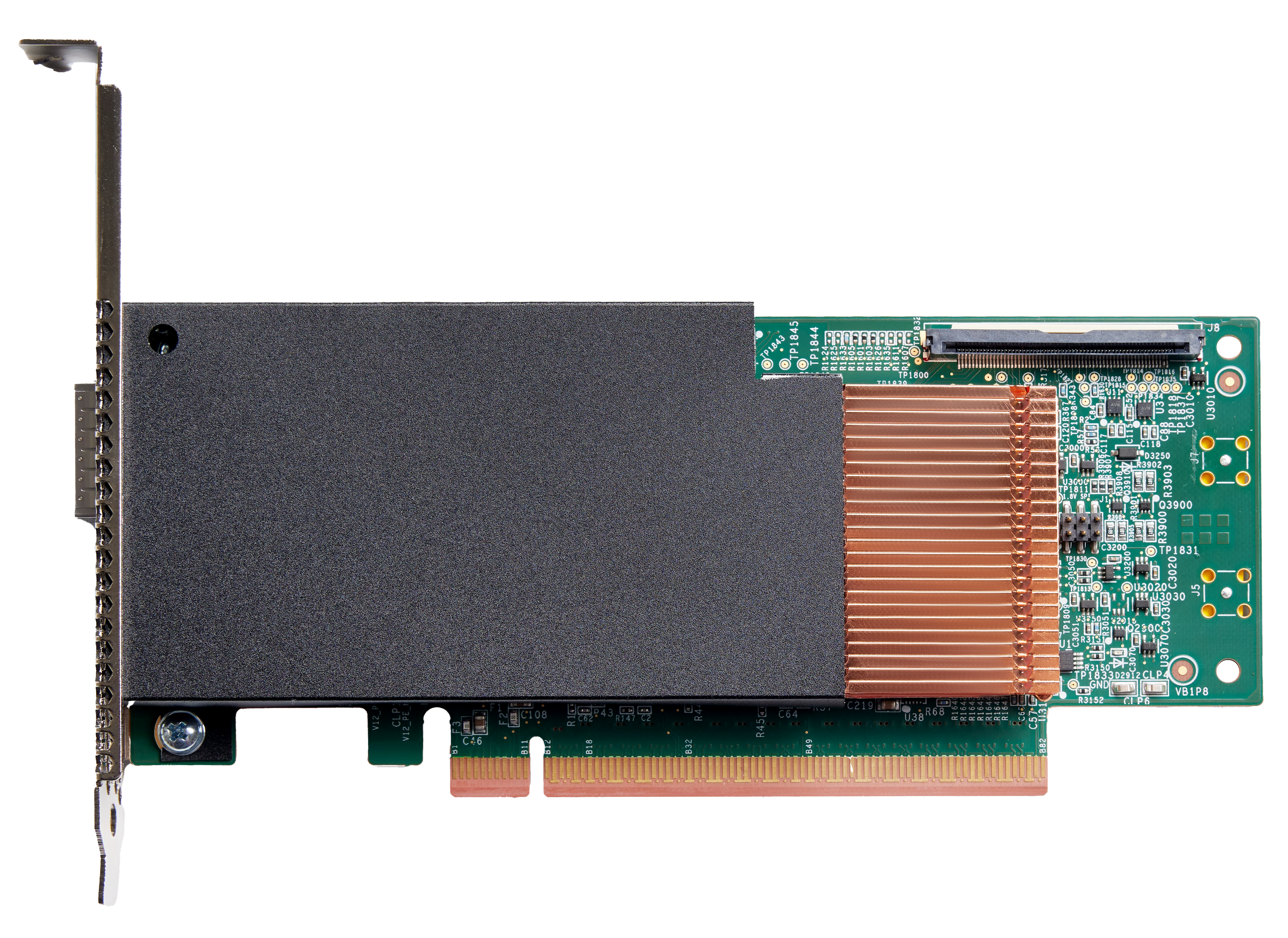
Single or Dual Port: Air-Cooled With Air Baffle
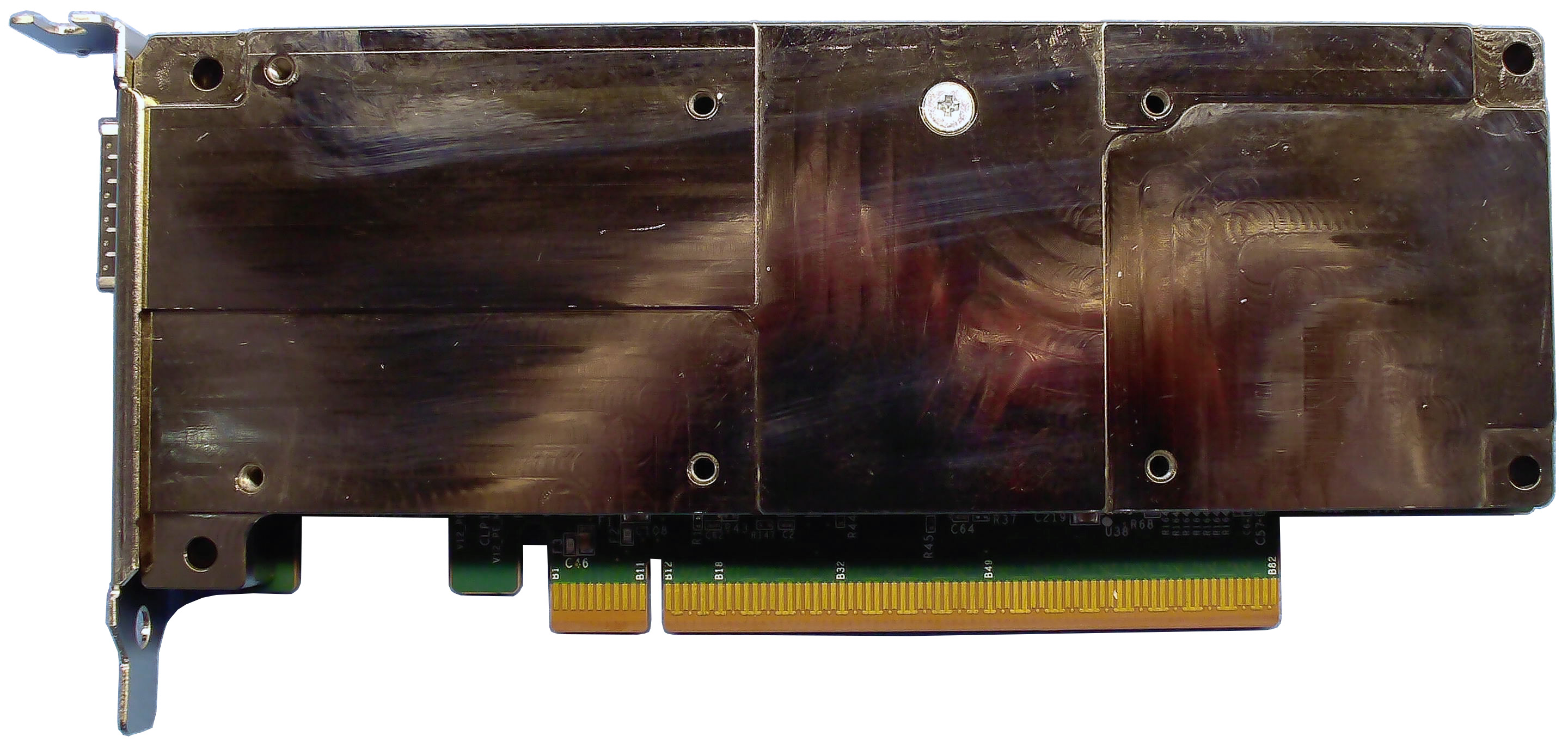
Single Port: Conduction-Cooled
The SuperNIC includes a PCIe 5.0 x16 interface, which provides maximum bandwidth between the host system and the network fabric. This high-speed connection enables the SuperNIC to deliver exceptional performance, including sub-microsecond MPI latency for time-sensitive applications. The SuperNIC is optimized for AI/ML workloads and features advanced congestion management technology.
Two cooling options support various deployment scenarios:
The air-cooled configuration uses traditional heatsinks on the ASIC and I/O components for standard data center environments.
The liquid-cooled configuration employs a conduction plate design for servers with integrated cooling loops.
Note
For OEM integration, a PCB option omitting cooling components allows the implementation of custom cooling solutions.
The SuperNIC comes in single-port and dual-port configurations to meet various connectivity needs. Single-port cards include a standard QSFP112 port that delivers 400 Gbps (4 x 100 Gbps) of bandwidth. Dual-port cards use a QSFP-DD112 (double density) port, providing two 400 Gbps connections through a single physical connector.
The SuperNIC delivers exceptional power efficiency, operating within the standard PCIe power envelope. Single-port configurations consume approximately 24 W, while dual-port configurations consume about 27.5 W (without optics).
2.3.1.1. SuperNIC Feature Summary
The CN5000 SuperNIC delivers enterprise-grade, high-performance networking capabilities designed for modern data center and HPC environments. It combines cutting-edge hardware acceleration with comprehensive software support and management features. Key features include the following.
2.3.1.1.1. Architecture, Performance, and Connectivity
Up to 400 Gbps maximum data rate per port
Specifically engineered for scalable Message Passing Interface (MPI) implementations with superior message rates
Fully compliant with the PCI Express 5.0 Base Specification, ensuring maximum throughput and compatibility with latest-generation systems
Flexible configuration from one to eight virtual lanes (VLs) plus one dedicated management VL
Configurable Maximum Transmission Unit (MTU) sizes of 2, 4, 8, or 10 KB to match application requirements
2.3.1.1.2. Advanced Networking Features
Message Signaled Interrupts Extended (MSI-X) for efficient interrupt processing and reduced CPU overhead
Both Unified Extensible Firmware Interface (UEFI) and PXE Boot capabilities for flexible system initialization
Full compatibility with OFA software stack for seamless integration with existing fabric management tools
Single Root I/O Virtualization for efficient resource sharing in virtualized environments
2.3.1.1.3. Management and Monitoring
The SuperNIC features an integrated management processor that provides system monitoring and control capabilities:
Real-time temperature reading and monitoring for thermal management
Secure firmware updates
Query Vital Product Data for asset management
The following management interface protocol is available to communicate with the management processor.
MCTP over SMBus for standardized messaging
2.3.1.2. SuperNIC Physical Specifications
This section provides a high-level overview of the SuperNIC physical specifications.
Dimensions
PCI Express low-profile card (height x length): 2.713 x 6.6 in. (6.89 x 16.76 cm)
Brackets
Standard bracket: 0.725 × 4.725 in. (1.842 × 12.02 cm)
Low profile bracket: 0.725 × 3.118 in. (1.842 × 7.92 cm)
Weight
0.37 lb (0.166 kg) with standard bracket installed
0.35 lb (0.157 kg) with low profile bracket installed
0.48 lb (0.216 kg) conduction-cooled, with low profile bracket installed
2.3.1.3. SuperNIC LEDs
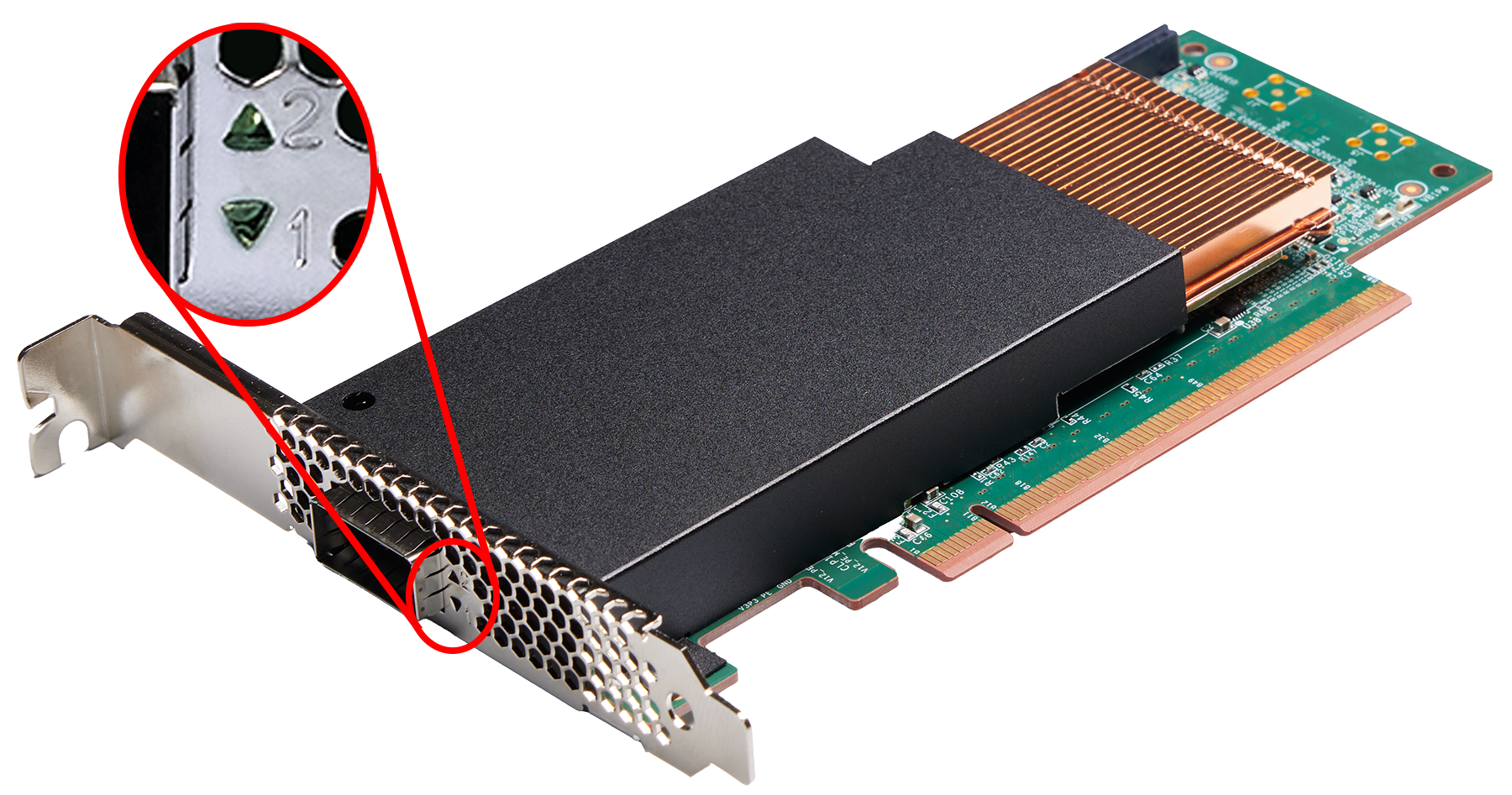
Two link status indicators are present on the CN5000 SuperNIC. One or both may be used depending on the number of ports supported:
Single-port SuperNIC – Upper indicator is Port 1; Lower indicator is unused.
Dual-port SuperNIC – Upper indicator is Port 1; Lower indicator is Port 2.
The link status indicator (Green) indicates the following conditions:
Off = Link down, power off, or following a power-on reset
Solid on = No activity
Blinking = Activity
Slow Blinking = Link up with traffic less than 10K packets/second
Fast Blinking = Link up with traffic greater than 10K packets/second
Intermittent Blinking = Beaconing mode